

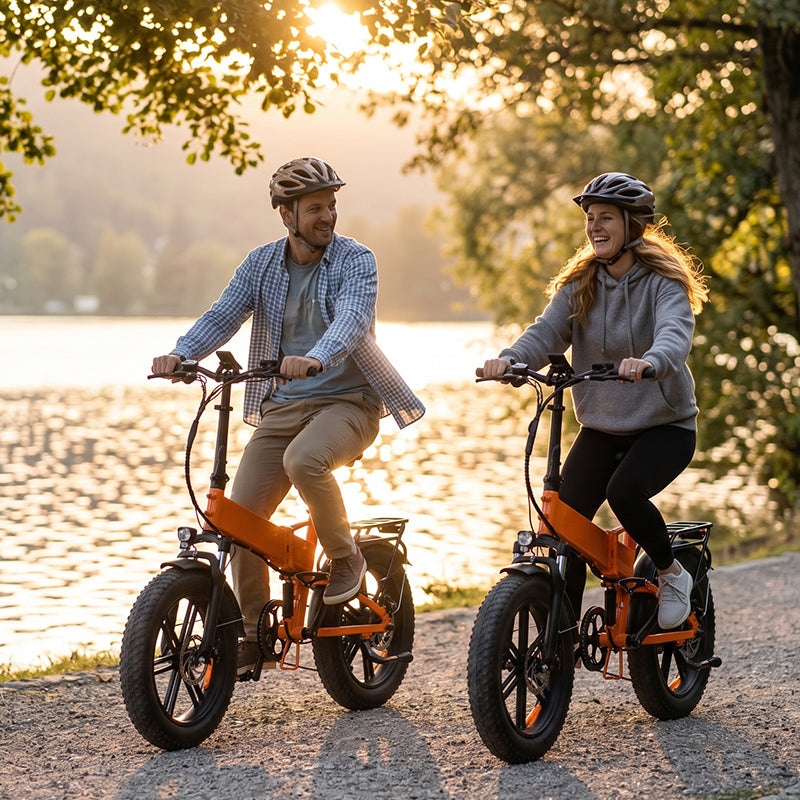
Buying your first e-bike should feel exciting. For most people, it feels overwhelming instead — dozens of models, unfamiliar words like "mid-drive" and "Wh," and prices that swing from €700 to €5,000 for bikes that look almost identical in photos.
The good news: choosing well is a process, not a gamble. If you answer seven simple questions in the right order, the "too many options" problem disappears and one bike clearly fits you. This guide walks you through those seven steps — the same framework BL EBIKE uses to help first-time riders in Europe pick with confidence.
Step 1: Name Your #1 Job for the Bike
Before you look at a single model, decide the primary job your e-bike will do. Most first-timers try to buy one bike that does everything and end up with one that does nothing perfectly. Pick the dominant use:
- Daily commute (paved roads, predictable distance) → a city/commuter e-bike.
- Comfort & leisure on canals, parks, and light trails → a comfortable city or step-through.
- Rough paths, beaches, or winter snow → a fat-tire e-bike.
- Apartment living or train + ride → a folding e-bike.
- Carrying kids or groceries → a cargo e-bike (a later topic; see our cargo guide).
If commuting is 80% of your riding, optimise for that. You can always branch out later.
Step 2: Pick the Right Type
E-bike "type" mostly determines comfort, where you can ride, and how you store it. Here is the beginner-friendly breakdown:
| Type | Best for | Terrain | Foldable? | Good first bike? |
|---|---|---|---|---|
| City / Commuter | Daily commute, errands | Smooth tarmac | Usually no | ✅ Easiest to live with |
| Fat Tire | Sand, snow, rough paths | All-terrain | Usually no | ✅ If you want comfort/off-road |
| Folding | Apartments, multimodal (train + ride) | Smooth tarmac | ✅ Yes | ✅ If storage is tight |
| Step-Through | Easy mounting, casual riders | Smooth tarmac | Varies | ✅ Most accessible |
A step-through frame (low or no top tube) is not a "women's bike" — it is the most practical first frame for anyone who values an easy, dignified mount and dismount, especially in city stops. If you are unsure between two frames, the step-through almost always wins on daily comfort.
Note: only true folding models fold. Don't assume a bike "folds" from photos — verify the spec. If folding is your priority, look at our folding collection. Browse folding e-bikes →
Step 3: Understand Motor & Battery (Without the Jargon)
You don't need an engineering degree, just two contrasts.
Hub motor vs mid-drive:
| Hub Motor | Mid-Drive | |
|---|---|---|
| Position | Inside the wheel | At the crank (centre) |
| Riding feel | Gentle push from behind | Natural, pedal-like, balanced |
| Best for | Flat cities, value buys | Hills, heavy loads, long climbs |
| Typical price | Lower | Higher |
For a first e-bike on flat-to-rolling European terrain, a hub motor is the smart, cost-effective default. Choose mid-drive only if you live somewhere genuinely hilly or plan to haul weight.
Battery & range:
| Battery size | Typical real-world range | Best for |
|---|---|---|
| ~360–500 Wh | 40–70 km | Short urban commutes |
| ~500–700 Wh | 70–110 km | Daily commute + weekend rides |
| 700 Wh+ | 110 km+ | Long commutes, hilly regions |
Range is real-world, not the optimistic lab number. Cold weather, headwinds, heavy riders, and throttle use all shorten it. When in doubt, size up one tier.
Step 4: Set a Realistic Budget (2026)
E-bike prices in Europe settled into clear tiers in 2026:
- Under €1,000: entry-level. Fine for short, flat rides, but expect basic components and shorter support.
- €1,000–€1,800: the sweet spot for beginners — a reliable motor, decent battery, and proper hydraulic brakes.
- €1,800–€3,000: longer range, better suspension, stronger build quality.
- €3,000+: cargo, high-performance, or premium commuting.
Spend where it matters: battery, brakes, and warranty beat fancy displays every time. A €1,400 bike with a strong battery and hydraulic disc brakes will out-serve you for years over a €900 bike that cuts corners there.
Step 5: Get the Frame & Fit Right
An e-bike is heavier than a normal bike, so fit matters more, not less.
- Frame style: step-through for easy mounting; classic diamond frame if you prefer the look and a stiffer ride.
- Size: check the standover height and reach. If you are between sizes, size down for an e-bike — a lighter-handling bike is safer and less tiring.
- Test the weight: can you lift it onto a rack or up a step? If not, a folding or lighter model may suit you better.
Step 6: Confirm the EU Class (25 vs 45 km/h)
In the EU, most first e-bikes are standard pedelecs: pedal-assist only, motor ≤ 250 W, cut-off at 25 km/h. These are legally bicycles — no license, no registration, no insurance required. That is exactly what you want as a beginner.
The faster 45 km/h speed pedelecs are legally mopeds (license, plate, insurance, mandatory helmet). They are tempting but add paperwork most first-timers don't need. Our full explainer covers this in depth. Read the EU e-bike laws guide →
Rule of thumb: if this is your first e-bike, buy a 25 km/h pedelec.
Step 7: Where to Buy in Europe
Where you buy is as important as what you buy, because service is the real product after year one.
- EU stock & warehouse: faster delivery and no surprise import delays.
- Local warranty & service: a real support channel, not just a chat bot.
- Clear return policy: you should be able to return it if the fit is wrong.
- Spare parts availability: batteries and tyres wear out — confirm they are obtainable in the EU.
Buying from a brand with European warehousing and a documented warranty protects you far more than chasing the cheapest listing from a far-off marketplace.
5 Red Flags When Buying Your First E-Bike
- No EU warranty or service address — who fixes it in 12 months?
- Ships from far away with vague delivery times — weeks of waiting and hard returns.
- "Throttle-only, totally legal" above 25 km/h — in the EU a true e-bike assists only while you pedal; verify before buying.
- Unknown battery cells — the battery is the most expensive and safety-critical part.
- No published specs (motor wattage, Wh, brake type) — opacity is a warning sign.
FAQ
What type of e-bike is best for a beginner?
A city or step-through commuter e-bike with a hub motor is the easiest first bike for most Europeans — simple to ride, easy to mount, and licence-free at 25 km/h. Choose fat-tire if you ride rough terrain, or folding if storage is tight.
How much should I spend on my first e-bike in 2026?
The best value tier is €1,000–€1,800, where you get a reliable motor, a usable battery (≈500 Wh), and proper hydraulic brakes. Avoid the very cheapest sub-€1,000 bikes if you plan daily use.
How far can a beginner e-bike go on one charge?
A typical 500 Wh battery delivers about 70–110 km of real-world range, depending on terrain, rider weight, and weather. Size up to 700 Wh+ if you have a long or hilly commute.
Hub motor or mid-drive — which is better for my first e-bike?
For flat-to-rolling cities, a hub motor is the better-value, lower-maintenance choice. Pick a mid-drive only if you face steep hills or carry heavy loads regularly.
Do I need a licence for my first e-bike in Europe?
No — a standard 25 km/h pedelec (≤250 W, pedal-assist) is legally a bicycle across the EU, with no licence, registration, or insurance required. Only 45 km/h speed pedelecs need a moped licence.
Should I buy an e-bike online or from a local shop?
Both work. Online from a brand with EU warehousing and a clear warranty is convenient and often better value; a local shop helps with fit and after-sales. Either way, confirm warranty, returns, and spare-parts availability before you pay.
Conclusion
Choosing your first e-bike comes down to a simple order: use → type → motor & battery → budget → fit → EU class → where you buy. Answer those seven, skip the spec-sheet noise, and the right bike becomes obvious. Start with a 25 km/h pedelec in the €1,000–€1,800 range from a brand with real European support, and you will be riding confidently within the week. Ready to start? Browse BL EBIKE's beginner-friendly e-bikes →

Share:
Fat‑Tire E‑Bike: What You Need to Know for Off‑Road Leisure Riding
Fat Tire vs City vs Folding E-Bikes: Which One Should You Buy in 2026?